The Two Sides of Singapore
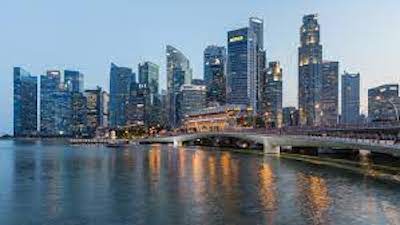
Singapore is among the wealthiest in the world in terms of GDP, and one of the most developed countries. Amazing architecture, rich cultures, and skyscrapers are among the many things the country has to show off, and movies like "Crazy Rich Asians" have enhanced this image of the small country. However, with this and Singapore's position as one of the most expensive places to live, there is indeed "another side" of Singapore that seems to be overlooked. 1/10 of Singapore's population of 6 million lives in poverty. The top 10% live next to the bottom 10% of the country (as you can drive across the entire country in less than an hour), and the rich overshadowing the poor in these instances adds to the stereotype that inequality and poverty do not exist in Singapore. On this page, we will explore the ways in which Singapore has tried to battle this problem.
Housing
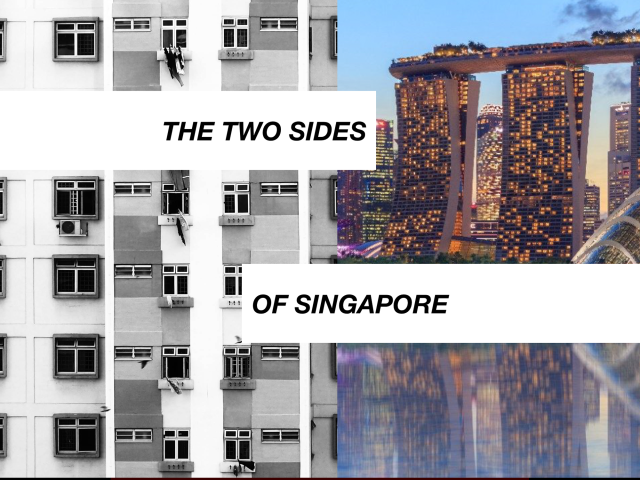
Most people in Singapore live in HDB Flats. It is public housing for rental in small units, and provided for lower-income households (As landed houses and condos in Singapore range between $1.5 - $8 million on average, these HDB flats are considered "affordable" at a median price of around $375,000 USD). For those who cannot afford the price, the government subsidizes rent based on collective family income, and provides government housing to the impoversed or the homeless. Homelessness in Singapore spans to around ~1000 people/year from a population of 6 million.
Economy
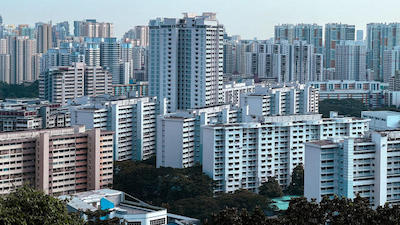
So how did Singapore, a small country the size of New York City, that has only been an independent country for 58 years, that does not have natural resources accelerate their economy so drastically? After decades of modernization and expansion, Singapore used its geographic placement to become one of the world's leading transshipment hubs connected to more than 120 countries. Today, Singapore is a prime investment destination with a conductive economic climate, making it one of the most pro-business economies in the world. Singapores annual GDP of US$340 billion allows it to run so that the government can provide some solutions to problems like homelessness, poverty, etc.